
LinkedIn marketing
for manufacturers and suppliers
Company page, people and paid ads working as one plan, aimed at the buyers who decide.
Measured by cost per inquiry, not by followers. Inquiries are prequalified before sales sees them.

Twenty of the right people beat twenty thousand impressions.
As a LinkedIn marketing agency for B2B manufacturers, I combine your company page, the profiles of your people and paid campaigns into one plan that reaches the buyers behind your next order.
- Who you reach: purchasing, engineering, plant management and owners, selected by function, industry and company size
- What runs: a company page that explains you, posts from real people, and ads where reach is needed
- What you get: inquiries and sales conversations, prequalified and reported every week
Is LinkedIn good for B2B marketing in manufacturing?
Yes, when your customers are companies and more than one person signs off on the purchase. On LinkedIn, people state where they work and what they do there. You don't have to guess who might care about a dosing system, a ceramic liner or a contract machining service. You pick the job function, the industry and the company size, and you reach maintenance managers at chemical sites or design engineers at equipment builders directly.
That precision has a price. Reaching someone on LinkedIn usually costs more than on Google or Meta. It pays off when the result is a conversation with the right decision maker and an order worth five or six figures is on the table.
Three levers
that work together
LinkedIn marketing is more than ads. Not every manufacturer needs all three levers, and the order matters.
-
Company page
Where everyone lands who wonders who you are. It has to say in ten seconds what you make, for which industries and where you deliver.
-
Your people
Posts and comments by your managing director and sales engineers reach further than the company page and build trust before anyone inquires. More under social selling for industrial sales.
-
Paid campaigns
Ads put the right message in front of a defined group, whether or not they follow you. The craft behind them is on the page about LinkedIn ads for manufacturers.
What you buy
On LinkedIn you don't buy reach. You buy attention from the twenty people who decide on your next order.
Who on the buying committee needs what
An industrial purchase rarely has one buyer. Each role reads your content with a different question, and a LinkedIn plan that speaks to all of them at once speaks to none.
Purchasing
Wants security: delivery reliability, references in the same industry, a supplier who will still be around in ten years.
Engineering
Wants data: tolerances, materials, test results, drawings. A post with a cross section often beats a polished image video.
Plant management and maintenance
Wants fewer stoppages: what fails less often, what is quicker to service, what costs less over the life of the line.
Management and owners
Wants results: payback, risk, and whether your company is a partner at eye level.
What your company page has to do
The company page is rarely where an order starts, but almost every interested buyer looks at it. If it is empty or out of date, it quietly costs you the inquiries your ads and posts have earned.
- Banner and logo: show what you make, ideally your product or plant, not stock imagery.
- About section: two sentences on what you solve for whom, then industries, materials and markets served.
- Products and services: the showcase tabs filled with your main product lines and links to the matching pages.
- Employees linked: your people list your company as employer, so their profiles feed back to the page.
- Regular updates: one useful post a week is enough, as long as it answers a question your customers actually ask.
What to post as a manufacturer
Industrial content does not need to be entertaining. It needs to be useful to someone who runs a plant. These formats work for most manufacturers I know from the powder and bulk solids industry and beyond.
| Content | Example | Who reads it | What it achieves |
|---|---|---|---|
| Application story | How a mill solved caking in a silo discharge | Engineering, maintenance | Shows you solve this problem |
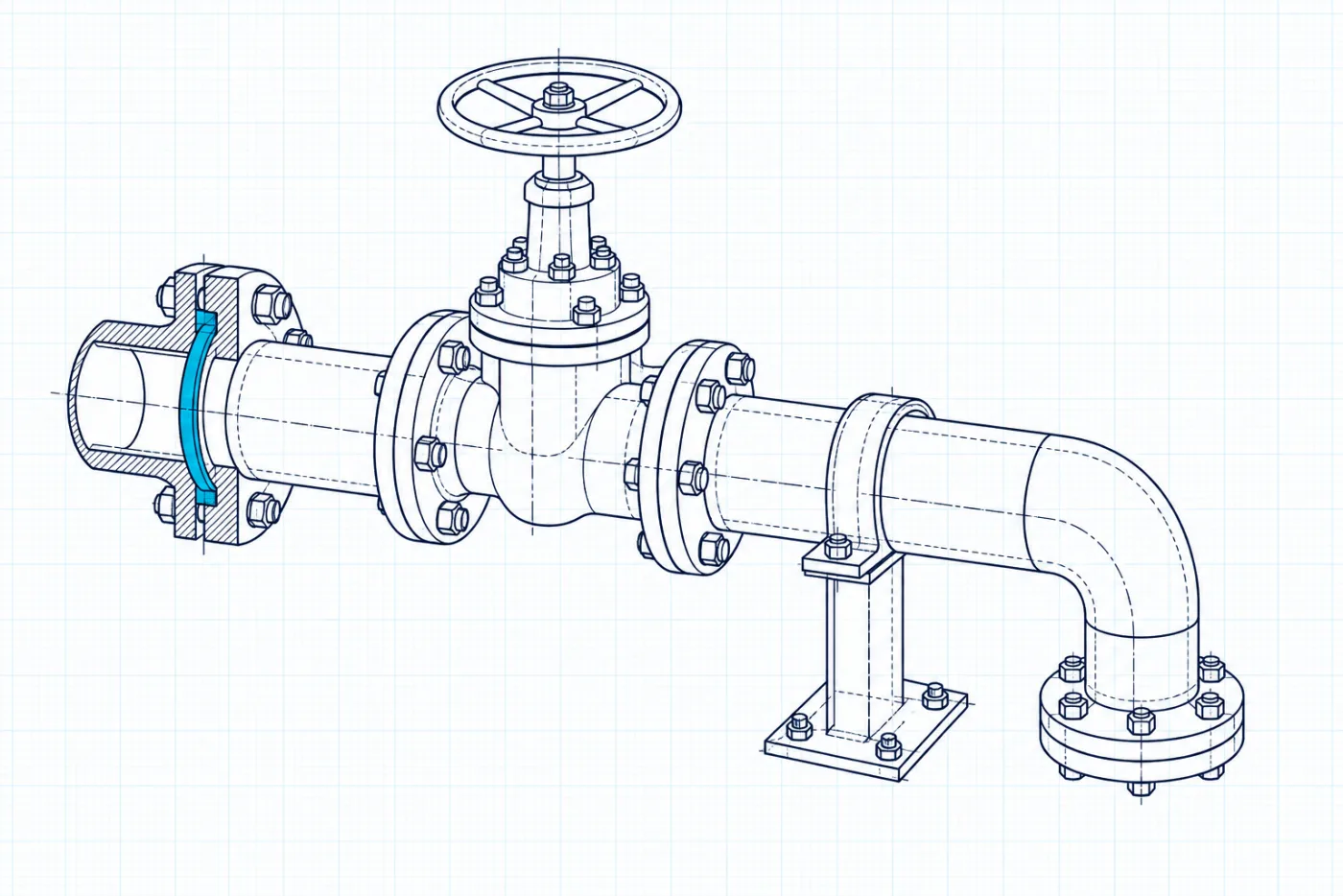
| Cross section or drawing | A valve in section, with the wear zone marked | Engineering | Proves technical depth |
| Short machine video | 30 seconds of a line running at the customer site | Everyone | Makes the product tangible |
| Trade show note | Where you exhibit, what you will show, who will be there | Purchasing, management | Turns posts into booked meetings |
| Lessons from a project | What went wrong at commissioning and how it was fixed | Plant management | Builds trust through honesty |
| Company news | New hall, new machine, new market | Purchasing, management | Shows stability |
LinkedIn groups and employee profiles
Two parts of LinkedIn marketing are often skipped, and both cost nothing but time.
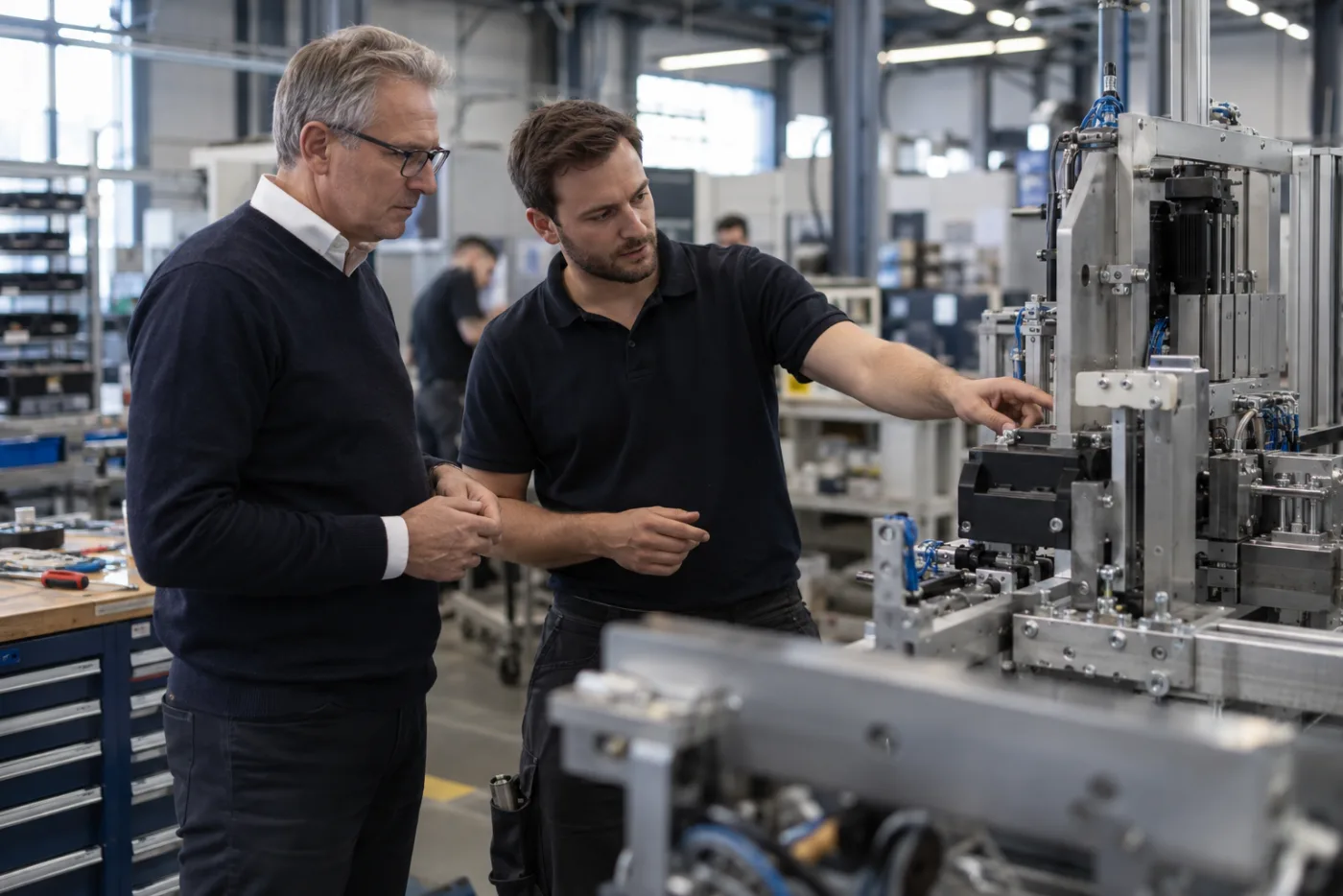
Groups: most LinkedIn groups are quiet. A few in technical niches are not: user groups around a process, associations, alumni of a trade show. Where engineers ask real questions, a precise answer from one of your people is worth more than a post on your own page. I look for those groups with you and leave the rest alone.
Employee profiles: a sales engineer whose profile still shows a job from six years ago undoes the ad that led a buyer to him. Aligned profiles, with a clear line about what they solve and for whom, make every other lever more credible.
Where LinkedIn fits, and where it doesn't
LinkedIn is not the right channel for every manufacturer. Before you spend a budget, it is worth checking which side you are on.
LinkedIn works well when
- Your customers are mid-sized or large companies
- Several people decide, from engineering to purchasing
- An order is worth enough to justify an expensive contact
- Your target accounts can be listed by name
- Examples: plant engineering, machinery, components for process industries
Other channels work better when
- Your customers are small workshops whose owners barely use LinkedIn
- The buyer searches actively and decides quickly
- Your product is bought by the user on the shop floor, not by an office
- In that case Google Ads for manufacturers or Meta ads often bring more
How a LinkedIn marketing engagement runs with me
Four steps. You are needed at two of them: the first and the third.
- 1
Define the audience
Which functions in which industries and company sizes decide on your offer? Together we turn that into target accounts and roles. Result: a target list your sales team agrees with.
- 2
Fix the foundation
Company page, the profiles of the people who will be visible, tracking on your website. Result: every click lands on something that convinces.
- 3
Launch content and ads
Posts in your language, ads for the roles that matter, both approved by you before they run. Result: your name in front of the right people every week.
- 4
Sharpen every week
What brings inquiries stays, what doesn't gets replaced. Result: a weekly report with cost per inquiry and per sales conversation, not with likes.
What LinkedIn marketing costs
Three things cost money or time, and all three should be visible before you start.
- Ad budget: paid directly to LinkedIn. You set the amount. The narrower and more sought after the role, the more a contact costs.
- My fee: a fixed fee for planning, page, content, ads, management and reporting, kept separate from the ad budget, cancellable monthly after the first three months.
- Your people's time: an hour or two a week for the managing director or sales engineers who become visible, for approvals and replies.
After a test phase you know what an inquiry costs in your market, and you decide on that basis.
Questions to ask any LinkedIn marketing agency
Three questions worth asking anyone who wants to take over your LinkedIn. Me included.
Do they know your buyers?
Agencies that usually sell to consumers make your posts too loud. A plant manager wants facts, not promises.
Do they measure inquiries or reach?
Impressions and engagement are intermediate numbers. Ask which number sits at the top of the report.
Do they work with your sales team?
An inquiry only has value once someone follows up. Good LinkedIn marketing is planned with sales, not around it.
What it costs
A fixed price for the launch phase, then cancel monthly. Your ad budget goes straight to the platform, not to me.
- Three-month launch phase: €4,990 flat
- Payment: €1,990 at the start, then two payments of €1,500
- One offer on up to two platforms
- Ad copy, images, landing page and lead magnet
- Retargeting from day one
- Prequalification of inquiries, up to 300 conversations a month
- Ongoing optimization, monthly report
- Each additional platform €290 a month
- After that €1,190 a month, cancel monthly
- Ad budget extra, from €600 a month
A case from practice
A US manufacturer of technical ceramics, a search market of 320 searches a month, July to October 2026.
What would this look like in your market? Let's find out in a short call.
Questions about LinkedIn marketing
Is LinkedIn a B2B platform?
Mostly, yes. People use it in their professional role, which is why it reaches decision makers in companies better than consumer networks do. It is not a sales channel by itself, though: it starts conversations that sales has to continue.
What is the 4-1-1 rule on LinkedIn?
A rule of thumb from content marketing: for every six posts, four share useful content from others, one is your own expertise and one is a sales message. For manufacturers I'd shift it toward your own expertise, because nobody else explains your process better than your engineers.
Who writes the content?
I do, from what you and your team tell me. Your experts talk, I write, you approve. That way the posts sound like your company and not like an agency.
How long until LinkedIn marketing works?
Ads deliver contacts within weeks. Visibility through your people builds over months. Plan for at least a quarter before judging the whole approach.
LinkedIn in the bigger picture
On LinkedIn the first interest forms, while the inquiry often comes later through Google or your website. How these channels connect is described on the page about industrial marketing, and all services are listed in the services overview. Examples by industry are on the pages about marketing for engineering companies and marketing for machinery manufacturers. Who is behind all this is on the about page.

Who decides on your next order?
In an intro call, we work out how to reach those people on LinkedIn.