
Marketing for machinery manufacturers
that reaches the people who decide
Engineers and buyers find your machine before they call a sales rep, and sales only gets qualified inquiries.
Your buyers research online long before the trade show. I steer by cost per sales conversation, not clicks.

The best machine loses to the one the engineer understood first.
Marketing for machinery manufacturers puts your machine in front of the engineers, plant managers and buyers who decide, before they ever talk to a sales rep.
- Who you reach: design engineers, production managers, maintenance and purchasing at the plants you want to sell to
- Channels: search ads on applications, LinkedIn ads by job function, a website that asks for application and timing
- What sales gets: fewer wasted calls and more conversations that lead to quotes
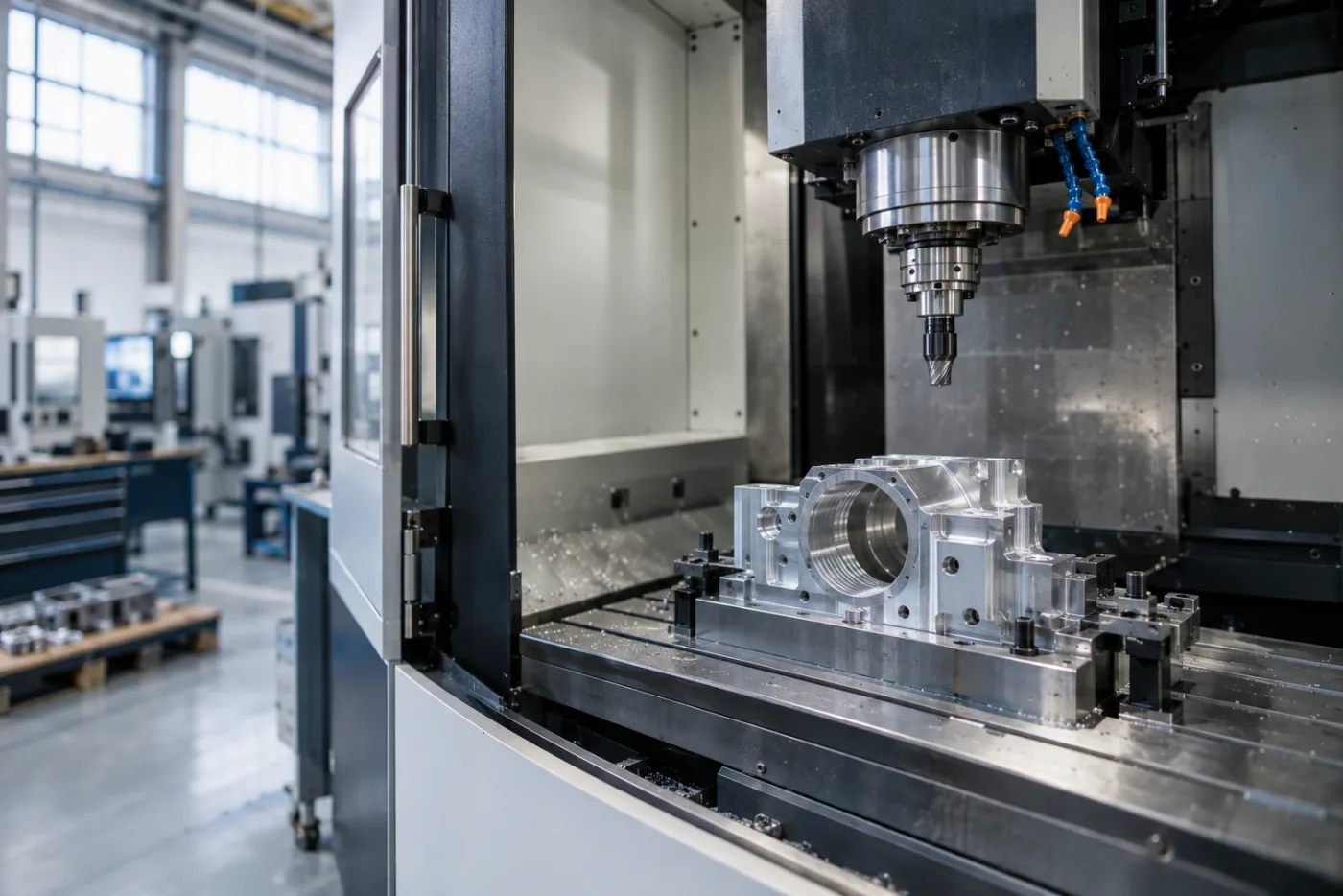
The machinery market in numbers
Machinery is an export business. According to VDMA, the German mechanical engineering association, German machinery exports came to about 199 billion euros in 2025, and the industry employed close to 1.3 million people in Germany in 2024.
For your marketing, that means one thing. Your next customers often sit in another country and search in another language. Relying only on trade shows and field sales reaches part of them, at a high cost per contact. Whether you build machines in Ohio, Bavaria or northern Italy, the buyer on the other side of the border searches the same way: for his application.
Why machinery marketing works differently
Consumer marketing tactics break down in front of a machine that costs as much as a house. Four things make the difference.
- Long sales cycles: months from first search to purchase order, often with a trade show and a test run in between
- Complex products: the buyer needs cycle times, tolerances and footprints before he believes a word
- Several people to convince: engineering, production, finance and purchasing all have a veto
- Narrow markets: a few hundred plants worldwide may be the entire target audience
The people who have to say yes
A machine is a committee decision. Each person on the committee asks a different question, and your marketing has to answer all of them in the order they come up.
Design engineer
Starts with specs and tolerances. Wants drawings, CAD data and an honest statement of what the machine is not built for.
Production manager
Thinks in cycle time, changeover, uptime and operator headcount. Needs numbers from a comparable application.
Maintenance
Asks about spare parts, service response and how the machine fits the existing line. Often has the loudest voice after the last breakdown.
Purchasing
Weighs lead times, certifications, total cost and payment terms. Arrives late, but can still kill a deal.
Owner or plant director
Signs the investment and asks one question: when does it pay back?
What wins the order
In machinery, the loudest offer doesn't win. The one an engineer understood first does.
Four channels
to technical buyers
No channel replaces the others. The right mix depends on how well your customers know what to search for. All of it belongs to industrial marketing as I practice it.
-
Search by application
Someone with a production problem searches Google for the fix, often in his own language. Google Ads for manufacturers
-
LinkedIn by job function
Ads to engineering, production and purchasing in your target industries and target accounts. LinkedIn ads in detail
-
Trade show with a lead time
Ads before the show to visitors from your target group, an email sequence after it to every booth contact.
-
Video of the machine running
A two-minute clip on real parts answers more questions than a brochure. Video ads for manufacturers
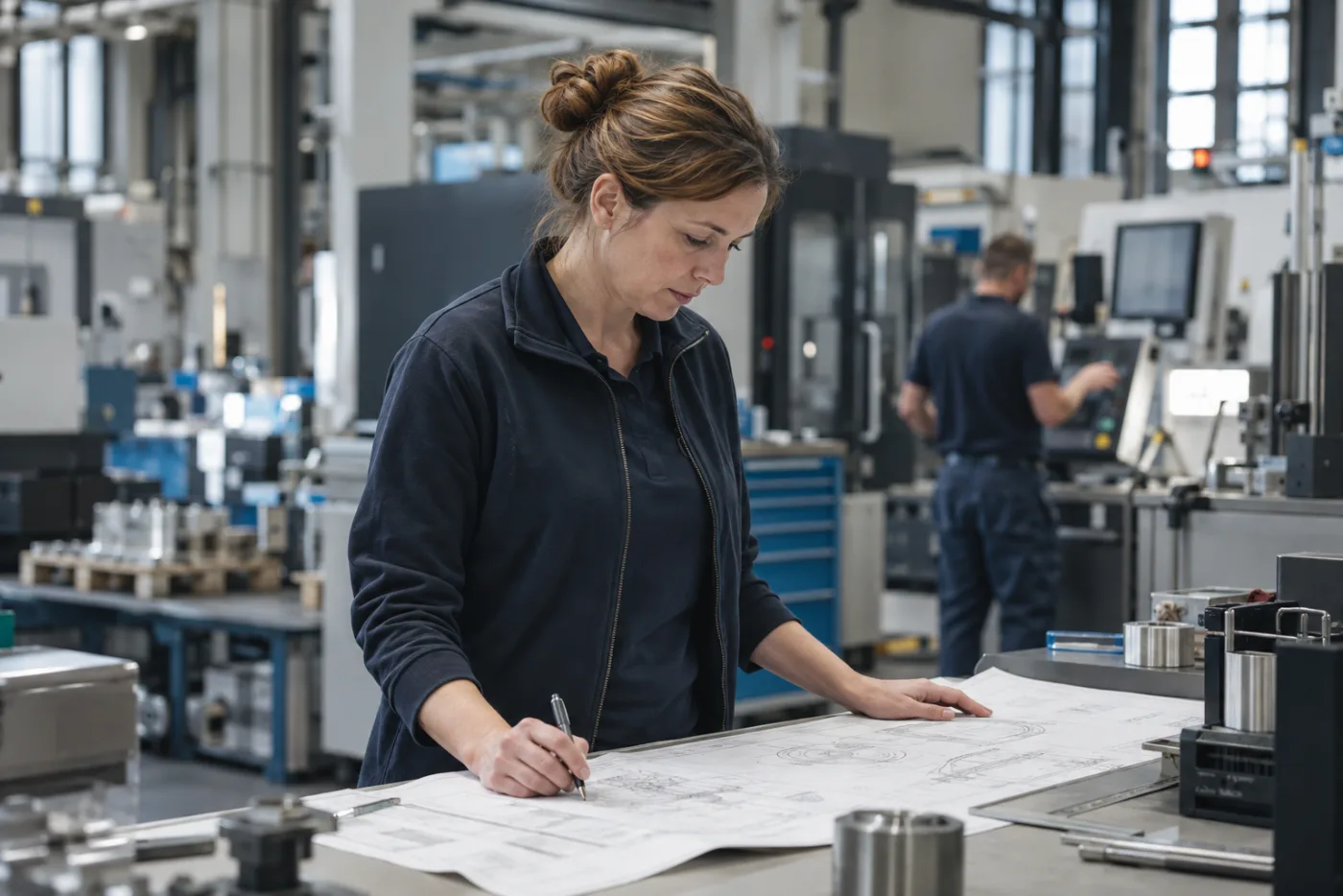
Your website is your best sales engineer
Every ad and every trade show contact ends up on your website. If it only shows product photos and a contact form, the budget leaks away.
What works for engineers are capability pages that commit to real numbers: one page per application, with cycle times, materials processed, sizes and a short video. Search engines rank those pages, and AI assistants such as ChatGPT quote them when an engineer asks which machine fits his task. A form that asks for application, quantity and timeline turns a visit into an inquiry your sales team can price. Websites for manufacturers
Content engineers actually read
Engineers don't click banners, and they skim anything that sounds like a sales pitch. Four formats hold their attention, because each one helps them do their job.
Application pages: one page per task the machine solves, with the parts, materials and output it handles. This is what search engines show for a specific query.
Comparisons: your process against the usual alternative, with the cases where the alternative is the better choice. Fairness is what makes the page credible.
Test reports: what happened when a customer's part ran on your machine, in numbers and with photos, as far as the customer allows.
Short videos: the machine running on real parts, two minutes, no music video. Engineers share these internally when they have to convince a colleague.
Trade show or pipeline?
Many machine builders still plan their year around two or three shows. That carries, as long as the right people walk past the booth.
Today
- New customers come from shows, dealers and the field sales network
- The website is a catalog with a contact form
- Show contacts are typed into a spreadsheet and fade
- Marketing is measured in clicks and booth visitors
With me
- Buyers find your application pages while they research
- Each inquiry states application, quantity and timeline
- Booth contacts receive useful follow-up for weeks
- You see cost per inquiry and per sales conversation every week

Customers in other countries
Field sales rarely covers more than a handful of countries well. Search ads and LinkedIn campaigns can run per country and per language, each with its own budget and its own report.
So you see in which market an inquiry is cheap before you sign a distributor or book a booth. I work from Germany, in German and English, which helps US machine builders who want buyers in Europe. Market entry in Europe
When your market is a list of names
Some machine builders know every potential customer by name: maybe 300 plants worldwide that run the process the machine is made for. For them, broad reach is wasted money.
The answer is account-based marketing. Your sales team names the target accounts, and LinkedIn ads run only to engineers, production managers and buyers at exactly those companies. Search ads catch anyone at those plants who researches the problem. Your sales reps see which accounts engage and call them with a reason, not a cold pitch.
A short list of the right plants beats a long list of clicks.
How marketing for machinery manufacturers runs with me
Four steps. Your sales team is involved in each one.
- 1
Applications and roles
Which applications you sell, in which industries and countries, and who decides there.
- 2
Inquiry path
Pages per application and a form that asks for use case, quantity and timeline.
- 3
Campaigns
Search and LinkedIn ads go live only after you approve them, with the budget you set.
- 4
Weekly report
Cost per inquiry and per sales conversation, split by channel and country. I replace weak ads.
What it costs and how long it takes
The two questions every owner asks, answered without promises I can't keep.
Cost: My fee and your ad budget are kept separate. The fee is fixed, the budget is yours and goes straight to Google or LinkedIn. After the first three months, the contract can be cancelled monthly.
Time: Campaigns start as soon as you have approved pages and ads. Orders take as long as your sales cycle. At one manufacturer I work for, the first order came seven weeks after the first ad click, while the average from inquiry to closed deal there is 178 days.
Budget: It follows the market, not a wish. I measure search demand before the first dollar is spent, so the budget fits what your niche can carry.
What it costs
A fixed price for the launch phase, then cancel monthly. Your ad budget goes straight to the platform, not to me.
- Three-month launch phase: €4,990 flat
- Payment: €1,990 at the start, then two payments of €1,500
- One offer on up to two platforms
- Ad copy, images, landing page and lead magnet
- Retargeting from day one
- Prequalification of inquiries, up to 300 conversations a month
- Ongoing optimization, monthly report
- Each additional platform €290 a month
- After that €1,190 a month, cancel monthly
- Ad budget extra, from €600 a month
A case from practice
A US manufacturer of technical ceramics, a search market of 320 searches a month, July to October 2026.
What would this look like in your market? Let's find out in a short call.
Questions about marketing for machinery manufacturers
What is manufacturing marketing?
Marketing for companies that build and sell physical products to other companies. For machinery it means reaching a small group of technical buyers over a long cycle, and measuring success in inquiries and orders rather than reach.
Does digital marketing replace the trade show?
No. It makes the show easier to plan. Visitors from your target group know beforehand that you'll be there, and booth contacts get follow-up instead of disappearing into a list.
How do you measure success?
By inquiries and sales conversations, not clicks. Every inquiry is assigned to its channel, so you see which budget prepares orders.
Should I start with SEO or with ads?
With ads, in most cases. They show within weeks which applications and countries bring inquiries. Organic rankings take longer, and the pages you build for the ads are the same pages that rank later.
Do I need my own marketing department?
No. I handle planning, ads, texts and reporting myself. From you I need one conversation about applications and target customers, your approval before launch and a sales team that picks up the inquiries.

Who is searching for your machine today?
In the intro call we find out where your next customers search and how they reach you.