
Packaging industry marketing
aimed at plants that fill and pack
Inquiries from plants planning a new line. You see what each sales conversation costs.
You explain your machine once, to me. I understand filling and packing lines and do the work myself.

Many who search for packaging machines actually want film. Your campaign has to know.
Packaging industry marketing puts machinery builders in front of the plants that plan a new packaging line or need to replace an old one.
- Audience: plant managers, process engineers and buyers who fill, bag, wrap or case-pack
- Channels: search ads that filter out material shoppers, LinkedIn, and pages on changeover and output
- Who does it: me, with powder and bulk solids handling as my own field
Source: PMMI, The Association for Packaging and Processing Technologies, 2025 Packaging State of the Industry report (September 2025); VDMA Food Processing and Packaging Machinery, 2025 figures.
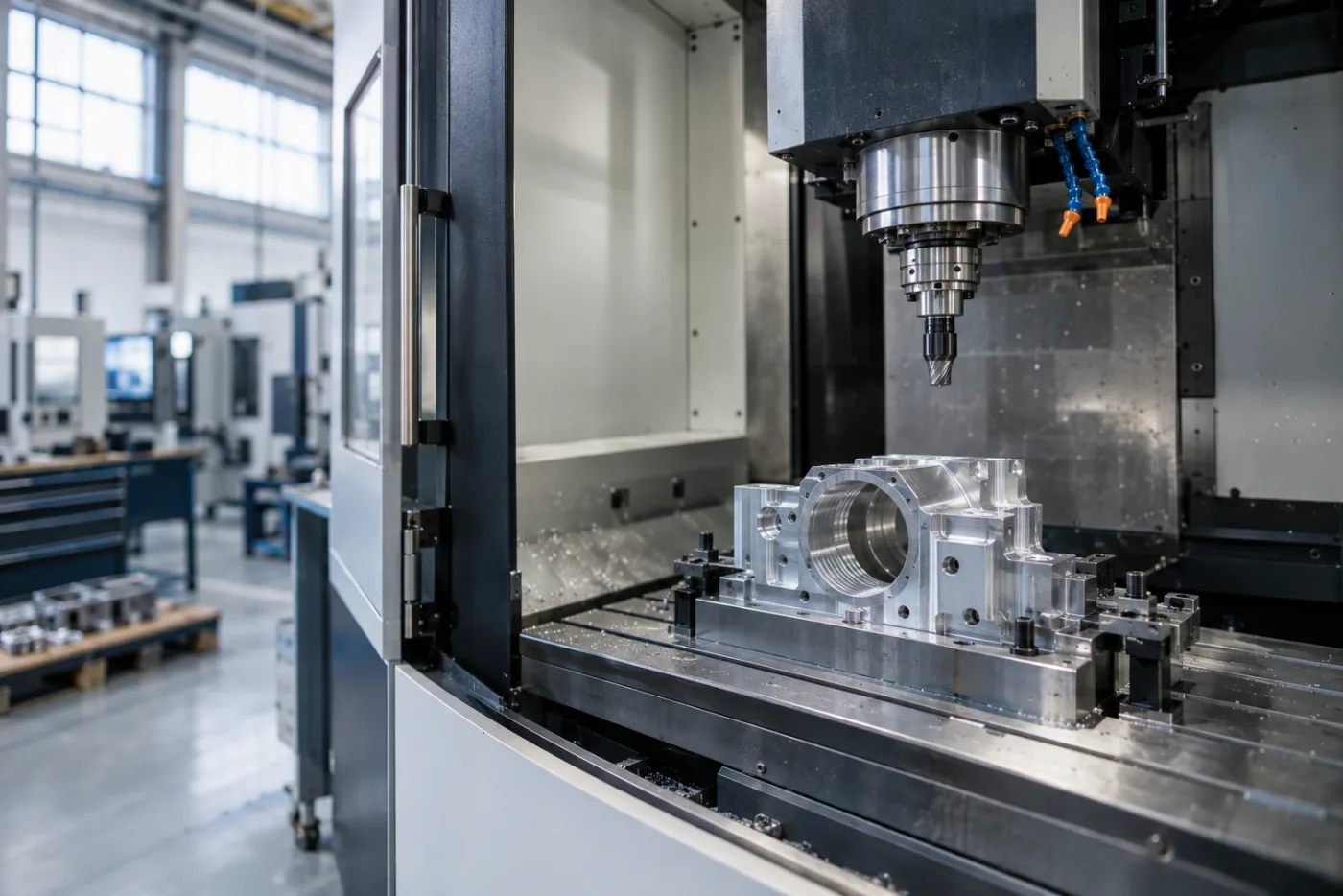
A large market with tough competition
Growth of two percent is not a boom. New orders have to be won from plants that already own a line, and from competitors who sell on price, including a growing number of builders from Asia.
Your customers also struggle to hire. PMMI reports that hiring and keeping staff remain a hurdle for machine builders and their end users alike. That is a sales argument in its own right: a plant that cannot find operators asks how much of the line runs without them.
Packaging as marketing, or the machine as the answer?
Search for packaging and marketing together and you find almost nothing but articles on package design. That matters to you anyway, because your customer thinks exactly that way about his package.
What your customer thinks
- The package is part of the brand on the shelf
- New sizes and formats need to reach stores quickly
- Plastic may have to give way to paper or mono-material
- Can the current line handle all of that?
What your ad should say
- How fast a format changeover takes
- Which materials the machine runs reliably
- How accurately it doses, even difficult powders
- Where a running line can be seen
Primary, secondary,
tertiary packaging
Packaging is usually split into three levels, and each one has its own machines and its own buyers. A campaign that mixes them speaks to nobody.
Primary packaging
Filling, dosing and sealing the product itself: bags, pouches, cans, bottles. Hygiene and accuracy decide, and quality has a say.
Secondary packaging
Cartoning, multipacking and case packing. The marketing team of the brand owner often joins the conversation here.
Tertiary packaging
Palletizing, stretch wrapping and load securing for transport. Operations and logistics decide, and they count staff hours.
Semi or fully automatic
Small plants ask about an entry model first. Larger ones calculate staff, output and downtime.
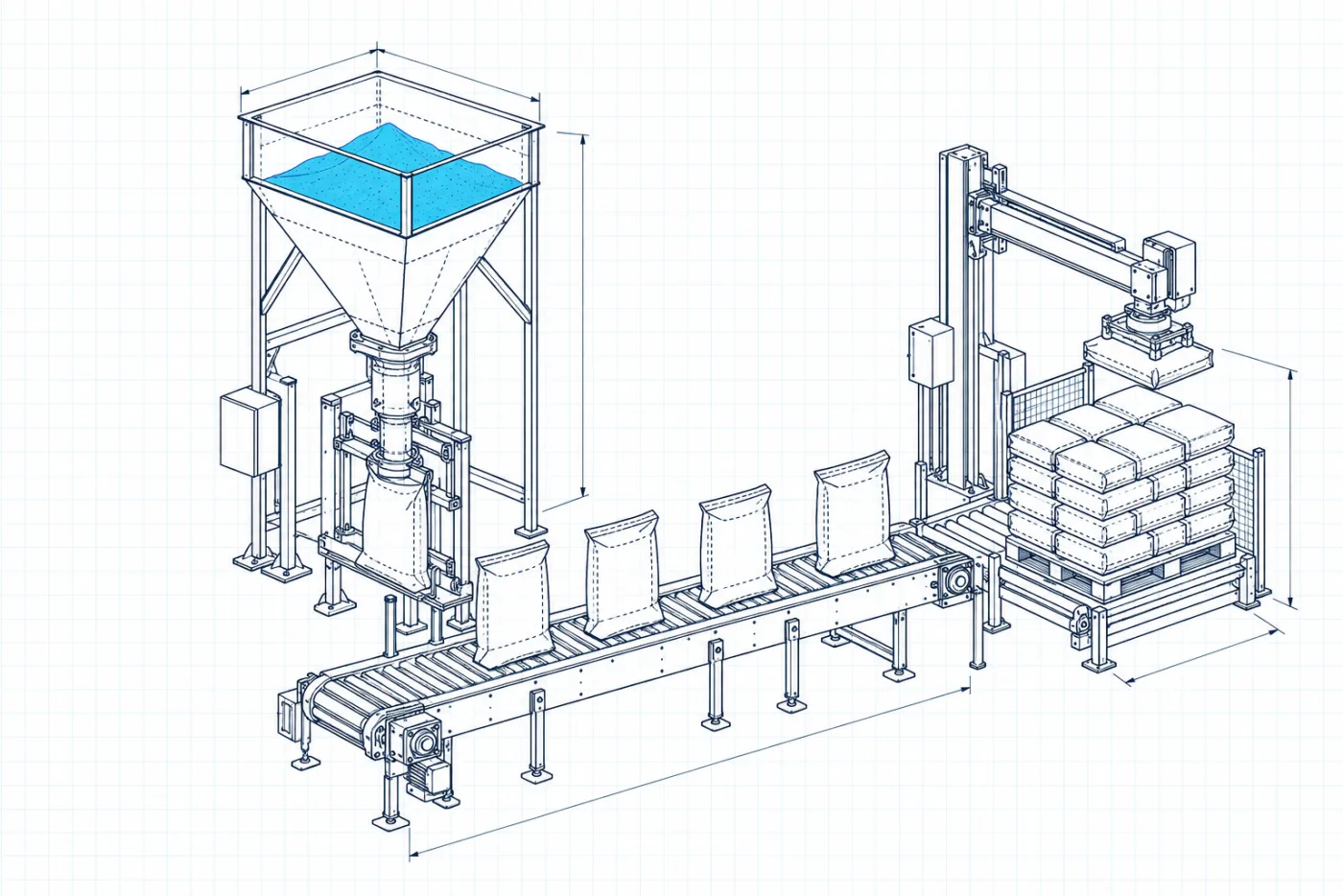
Filling powders and bulk solids
Powder and bulk solids handling is my own field. I run PowderBulkVideos.com, an industry portal with 127 manufacturer videos and 130 company profiles from 19 countries, and 977.consulting grew out of questions those manufacturers asked about paid ads.
Machines that pack free-flowing, dusty and sometimes sticky products have their own buyers. Valve and open-mouth baggers for cement, mortar, feed and chemicals. Bulk bag stations, often bought with silo, conveying and filter. Auger fillers for food and pharma. More on that market on the page about marketing for bulk material handling companies.
What it comes down to
Your customer does not buy a packaging machine. He buys the freedom to run a different format tomorrow.
Why campaigns here need to be precise
Packaging is a word with many meanings. Without tight control you pay for people who want to buy boxes.
Separate material from machines
I exclude searches for film, cartons and labels, so the budget stays with plants looking for a machine. How I set up search campaigns for builders is on the page about Google Ads for manufacturers.
Ask for output
A form that asks for product, container and target output per hour saves your sales team the first phone call.
Use the PPWR
The EU Packaging and Packaging Waste Regulation applies from August 12, 2026. Many fillers selling into Europe are reviewing their lines, which gives you a reason to publish.
Argue past the price
If you only compete on price, you lose against cheap imports. Show availability, local service and total cost of ownership.
How I work with packaging machinery builders
Four things happen in order, and nothing starts without your approval.
- Sort machines and markets: which lines for which products and industries, and which jobs you would rather not get.
- Sharpen the search ads: terms for machines and applications, plus a long list of excluded material searches.
- Show running lines: short videos from customer plants or your test center, and one page per application with output, formats and materials. Video ads for technical products
- Steer by inquiries: every week the cost per inquiry and per sales conversation, split by machine type.
The method behind it is described under industrial marketing. Packaging lines are machinery, so the page on marketing for machinery manufacturers applies here as well.
Mistakes that cost packaging builders inquiries
Planning only around the show
PACK EXPO in the US and interpack in Düsseldorf bring the industry together. interpack last ran in May 2026 and comes back in 2029. If you rely on the booth, you are hard to find in between.
Explaining the machine, not the customer's product
A filler thinks in coffee, milk powder or dry mortar. Pages by product and container meet him where he searches.
A form that is too short
Name and phone number are not enough. Without product, container and output, sales cannot tell whether the request fits your machines.
One message for every buyer
The plant manager wants uptime, the buyer wants price and delivery, the brand owner wants formats. One generic brochure answers none of them.
What it costs
A fixed price for the launch phase, then cancel monthly. Your ad budget goes straight to the platform, not to me.
- Three-month launch phase: €4,990 flat
- Payment: €1,990 at the start, then two payments of €1,500
- One offer on up to two platforms
- Ad copy, images, landing page and lead magnet
- Retargeting from day one
- Prequalification of inquiries, up to 300 conversations a month
- Ongoing optimization, monthly report
- Each additional platform €290 a month
- After that €1,190 a month, cancel monthly
- Ad budget extra, from €600 a month
How I work
Four steps from the first call to inquiries that come in regularly.
- 1
The intro call
You tell me what you sell and to whom. I tell you openly whether I can help and which route fits. Result: you know whether it fits.
- 2
Target customers and message
I define which roles in which industries we reach, and translate your offer into their language. Result: you know your target customers and your message.
- 3
Campaigns and inquiry path
Ads, content and a form that answers the key questions up front. Result: you approve everything before it starts.
- 4
Measure and sharpen
I optimize continuously and report every month what an inquiry and a sales conversation cost. Whatever doesn't carry its weight gets replaced. Result: you see every month what an inquiry costs.
Step 1 is a 20-minute call. Free, directly with me.
A case from practice
A US manufacturer of technical ceramics, a search market of 320 searches a month, July to October 2026.
What would this look like in your market? Let's find out in a short call.
Common questions
How does packaging help in marketing?
For your customer, a great deal. The package protects the product, informs the buyer and carries the brand onto the shelf. That is why marketing and product management often sit at the table next to engineering and purchasing when a new packaging machine is chosen. If you speak to them too, you have an edge.
Semi or fully automatic: how do I reach both?
Separately. For a semi-automatic machine, a smaller plant asks about entry price, floor space and operation. For a fully automatic line, a larger plant calculates output per hour, staff and availability. Two pages and two ad groups keep either one from getting the wrong answer.
Does advertising help against low-cost builders?
It does not lower your price, but it puts you in front of customers who care about service, spare parts and short distances. You find them more precisely through search and LinkedIn than through catalogs.
Is LinkedIn worth it for packaging machinery?
Yes, when targeting goes by function and industry: production, process engineering and plant management in food, chemicals or building materials. For investments of this size a small, carefully chosen audience is enough.
What should a page for one packaging machine show?
The things a plant manager checks before he calls: output per hour, container sizes, materials it runs, changeover time and floor space. Add a short video of the machine with a real product and a form that asks for exactly those values. A page like that answers the first questions before your sales engineer picks up the phone.
Does this also work for packaging material suppliers?
The logic is the same, the buyers differ. A converter of films, bags or cartons sells to purchasing and to the brand owner's packaging developers, often against tight specifications and recycled content targets. The channels stay search, LinkedIn and pages per application.

Which line should get more inquiries?
Tell me which machines you build and for whom. In the first call I'll tell you whether and where advertising will work for you.
Book an intro call or see all industries