
Market entry Europe:
inquiries from German and EU buyers
I run the marketing part of your European launch from Germany: search ads, LinkedIn, local-language landing pages.
For US manufacturers who want inquiries from Germany, Austria, Switzerland and the rest of the EU, measured before you spend.

Measure first. Nobody buys because you translated a website.
For a US manufacturer, market entry in Europe means picking an entry model, settling legal and tax questions, and building demand country by country.
- Start with demand: Search volume and LinkedIn audiences per country show where buyers already look for what you make.
- One market first: For many industrial suppliers Germany is the first test, and German pages also reach Austria and Switzerland.
- My part: Search ads, LinkedIn, landing pages in the local language and prequalified inquiries, run from Germany.
- Not my part: Company formation, tax, customs and CE conformity belong with lawyers, tax advisors and compliance specialists.

What I do when you enter the European market
I'm Robin Steinheimer, founder of 977.consulting in Taunusstein, about an hour from Frankfurt. I have worked in online marketing for industrial companies since 2003, in German and in English, and I know how plant managers and purchasing departments in the German-speaking countries look for new suppliers.
I also run PowderBulkVideos.com, an industry portal for powder and bulk solids with 130 company profiles from 19 countries. 977.consulting began with requests from that portal: its manufacturers wanted support with paid ads and social selling.
When you are entering the European market, I take over the industrial marketing side: which countries search for your products, which campaigns reach the right buyers there, which pages turn a click into an inquiry. The rest of a market entry needs other people, and I'll name them.
The parts of a market entry and who handles them
A European market entry strategy covers more than marketing. Most guides list these workstreams without saying who does what, so here is the split as I see it. Data protection runs through several rows. The GDPR (Regulation (EU) 2016/679) applies to every inquiry form and every contact list, so I build forms and tracking with it in mind, and your lawyer checks the privacy notice.
| Workstream | What you need to settle | Who handles it |
|---|---|---|
| Market research | Which countries search for your product, how large the buyer pool is | I measure search demand and LinkedIn audiences |
| Entry model | Export, distributor, branch office or subsidiary | You, with legal and tax advice |
| Legal and tax | Entity, VAT registration, contracts, terms of sale | Lawyer and tax advisor in the target country |
| Product compliance | CE marking, declarations of conformity, documentation | Compliance specialist or notified body |
| Logistics | Incoterms, customs, warehousing, spare parts | Freight forwarder or distributor |
| Pricing and currency | Prices in euros and Swiss francs, payment terms | You and your finance team |
| Marketing and inquiries | Search ads, LinkedIn, local landing pages, trade show leads, qualification | Me |
Entry models
and what each means for marketing
How you sell in Europe as a US company depends first on the entry model. It decides who answers an inquiry, and that changes what your ads and pages can promise.
-
Direct export
You sell from the US and ship. Your pages need delivery terms, lead times and the name of whoever handles service in Europe, or buyers stop at the form.
-
Distributor or sales agent
A local partner owns the customer relationship. Campaigns then feed the partner, and you agree in writing who follows up which inquiry.
-
Branch office
A registered branch gives you a European address and phone number. Purchasing departments look for both before they put a new supplier on their list.
-
Subsidiary
A local company, such as a German GmbH, carries the most weight with buyers and takes the most setup. Marketing can start before it is registered.
-
Joint venture or licensing
A partner produces or sells under your name. Marketing becomes shared work, and the rules for your brand belong in the contract.
The US playbook versus European buyers
Expanding to Europe from the US usually starts with a copy of what works at home. The product is rarely the problem. These habits are.
What works in the US
- One English website for every market
- Specifications in inches, psi and degrees Fahrenheit
- A form that requires a US state and a five-digit ZIP code
- Cold email sequences to purchased contact lists
- One campaign called "Europe" with one budget
What European buyers expect
- Pages in their language, at least German for the DACH region
- Metric units, EN and ISO standards, data sheets on A4
- A form that accepts any country, phone format and postcode
- Search ads and LinkedIn, since advertising email needs prior consent in Germany
- Campaigns per country, with budgets that follow measured demand
Not one market
The EU has one single market and 24 official languages. Your buyers search in theirs, so your campaigns start there too.
Entering the German market and the DACH region
Germany, Austria and Switzerland share a language, so one set of German pages can serve a DACH market entry. The differences lie in law, currency and wording.
- Germany: The largest economy in the EU (Eurostat, GDP 2024). Many suppliers are owner-managed Mittelstand companies with long, loyal supplier relationships.
- Austria: EU member with the euro. The same German pages work, with a few words of its own, such as Jänner for January.
- Switzerland: Not an EU member. Prices in Swiss francs, separate customs rules, and written Swiss Standard German drops the ß (Strasse, not Straße).
- Other languages: Switzerland also buys in French and Italian. A second language comes after the first market has proven itself.
German engineers read the data sheet before they read the ad. Put the specs on the landing page.
How to sell to German companies
B2B marketing in Germany runs on documentation and patience. Purchasing, engineering and plant management decide together, and they check a new supplier carefully before the first call.
These five points decide whether a German buyer answers you.
Formal address
Use "Sie" in ads, pages and emails. The informal "du" reads like consumer advertising to an engineer in a German plant.
Specs before the pitch
Dimensions, materials, tolerances and standards belong on the page. A request for "a quick call" without data gets ignored.
Consent before email
Section 7 of the German Act Against Unfair Competition (UWG) treats advertising email without prior consent as unlawful, also between companies. Ads fill that gap.
Legal notice
German buyers expect an Impressum with company name, address and register entry. Ask your lawyer which rules apply to your site.
Buying center
Expect several contacts per company over months. Retargeting keeps your name in front of the people who join the decision later.

An example: measuring Europe for a US manufacturer
A US manufacturer of technical ceramics has had me run its Google Ads in North America since July 2026. In November 2026 I measured demand for its other product lines in twelve markets: 124 English search terms plus the local languages, for a measurement cost of 1.08 dollars.
The answer was clear. One product group stood out: custom ceramic components, searched roughly 2,000 times a month across the European markets, close to the level in North America. Three new campaigns came out of it, one of them for components in Europe, prepared and partly approved by the client. How the campaigns in North America performed is documented in the case study on technical ceramics.
Measurement November 2026. Sources: campaign data of the client and PowderBulkVideos.com.
Trade shows in Europe for manufacturers
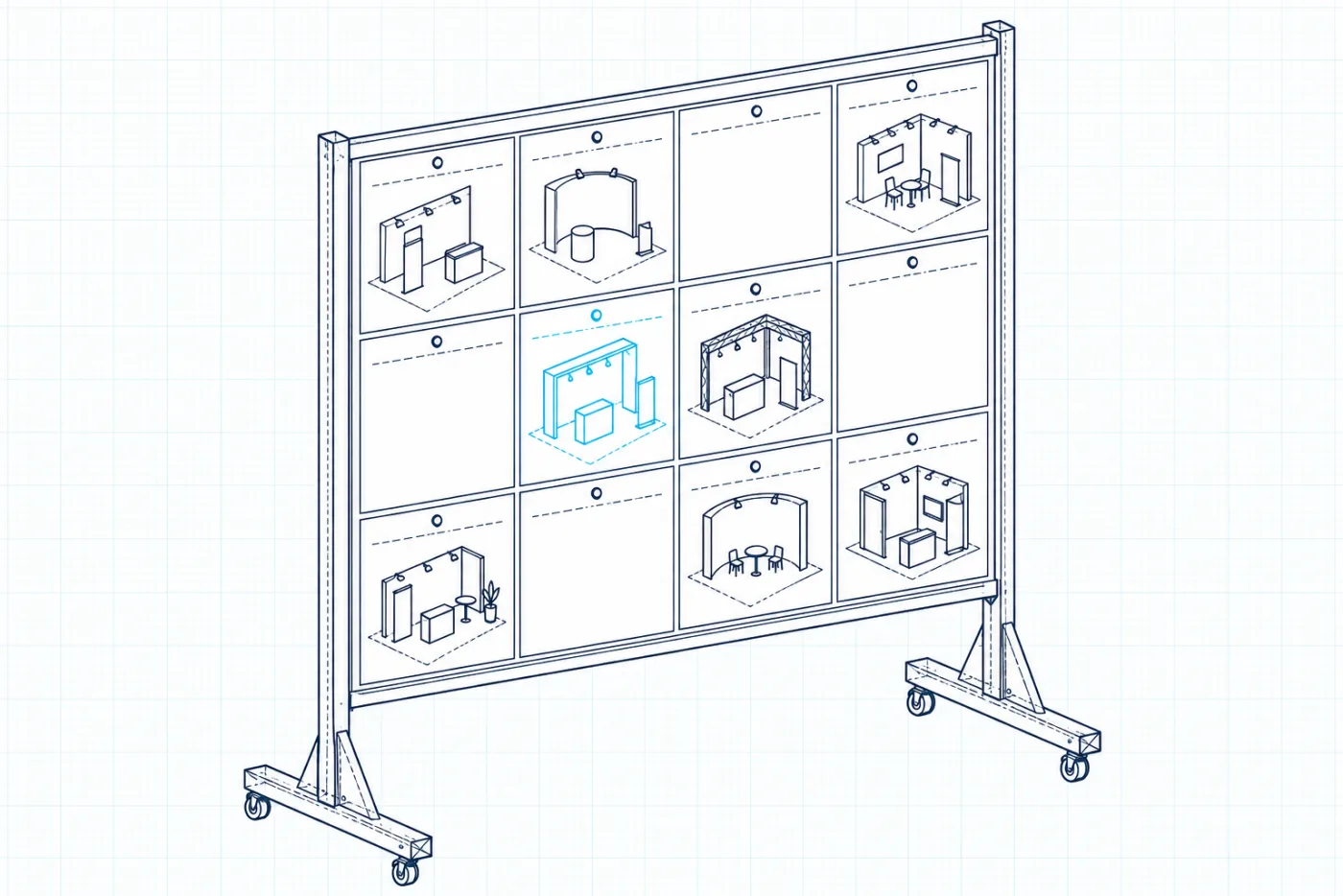
Germany hosts many of the fairs where industrial buyers from all over Europe meet suppliers. A few that matter for manufacturers:
- Hannover Messe: industrial technology and automation, in Hanover
- ACHEMA: process industry and chemical engineering, in Frankfurt
- POWTECH: powder and bulk solids processing, in Nuremberg
- SOLIDS: bulk solids handling, in Dortmund
- K: plastics and rubber, in Düsseldorf
- interpack: packaging and processing, in Düsseldorf
A booth alone rarely pays for a first European presence. The work around it does: LinkedIn ads to the engineers and buyers of your target companies in the weeks before, a page to book a meeting at the booth, and a follow-up within days. That trade show lead generation is the part I take over. Booth, freight and staff stay with you.
B2B lead generation in Europe, step by step
Five steps from the first measurement to inquiries your sales team can work with. Nothing goes live without your approval.
- 1
Measure demand per country
I check search volume for your products in English and the local languages, plus LinkedIn audiences by country, industry and job function.
You know which countries carry a budget and which don't. - 2
Pick the first market and the message
One country or one language region, with the arguments that count there, such as local stock, service or delivery time.
A launch plan for one market, with budget and a target cost per inquiry. - 3
Build pages in the local language
Metric specs, a contact option in European hours, and a form that takes European addresses. I write the landing pages and your lawyer checks the privacy notice.
A German buyer can inquire without switching to English. - 4
Launch search ads and LinkedIn
Google Ads for manufacturers reaches buyers who already search, LinkedIn ads reach engineers and plant managers who don't know you yet.
Campaigns per country, approved by you before they start. - 5
Qualify and report
Each inquiry answers a short form and a WhatsApp follow-up message before it reaches sales. You get a weekly report with cost per inquiry and per sales conversation.
Your US team talks to buyers who fit.
A case from practice
A US manufacturer of technical ceramics, a search market of 320 searches a month, July to October 2026.
What would this look like in your market? Let's find out in a short call.
Questions about market entry in Europe
Do I need a European company before I can advertise?
No. Google Ads and LinkedIn campaigns can target European countries from your existing accounts. Whether you need a local entity, a VAT registration or an EU representative for your products depends on how you sell and invoice. That is a question for your tax advisor and lawyer.
Is English enough for European industrial buyers?
Many engineers read technical English well. Search is different: people type queries in their own language. A German campaign needs German keywords and a German landing page, even if the conversation later moves to English.
Which European country should I enter first?
The one where measured demand, existing customers and your logistics overlap. For many industrial suppliers that is Germany, because German pages also reach Austria and Switzerland. The measurement in step one shows whether that holds for your product.
Do you handle company formation, tax, customs or CE marking?
No, I'm not the right contact for that, and I'd rather say it up front. I can tell you which questions to take to a lawyer, a tax advisor or a compliance specialist, and I plan the marketing so it fits the entry model you choose.
Are you a marketing agency in Germany for US companies?
I run marketing in Germany and Europe for manufacturers from abroad, from Taunusstein near Frankfurt. You deal with one person who does the work himself, in English with you and in German with your buyers. More about how I work is on the services overview.
How do inquiries from Europe reach my sales team in the US?
Every inquiry is prequalified and passed on with the answers. Frankfurt is usually six hours ahead of New York, so a buyer who writes in the morning has received a follow-up before your team starts its day.
How is the work billed?
A fixed fee for my work, with the ad budget kept separate. After the first three months the contract can be cancelled monthly.

Planning your first European market?
In a free intro call of 20 to 30 minutes, by phone or video, you tell me what you make and where you want to sell. I tell you what I'd measure first, and whether I'm the right person for it.