
Industrial marketing
for manufacturers, suppliers and engineering firms
Your technology reaches the people who specify, approve and order it. Sales gets prequalified inquiries.
Measured by cost per inquiry and per sales conversation, not by clicks. Done hands-on since 2003.

Nobody orders because of an ad. Buyers order when everything has been checked.
Industrial marketing is the marketing of machines, equipment, components and materials to companies that use them to produce, build or operate, aimed at getting you on the buyer's shortlist early.
- Audience: Engineers, purchasing managers, plant managers and owners
- Buying process: A group decision, a long evaluation, an order against a specification
- Goal: Interest that turns into a request for quote your sales team can work
What counts as industrial marketing
Industrial marketing covers everything a company sells to other companies that make things with it. Four kinds of goods, each with its own buyer:
Raw materials and process materials
Powders, resins, chemicals, refractory. Bought by purchasing against a specification, often on long-term supply contracts.
Components and parts
Pumps, valves, drives, bearings, ceramic liners. Chosen by the design engineer, ordered by purchasing, built into somebody else's machine.
Capital equipment
Machines, process lines, complete plants. A one-time investment that the owner or plant manager signs off after months of evaluation.
Spare parts and service
Wear parts, maintenance, retrofits. The maintenance manager searches by type and part number and orders again and again.
How industrial marketing differs from consumer marketing
B2B marketing is the umbrella for everything one company sells to another: software, consulting, insurance, office supplies. Industrial marketing is the part of it with the longest road to a purchase order, and it is even further from consumer marketing.
Consumer marketing
- One person decides, often within a day
- Emotion and price carry the decision
- Many buyers, small order values
- Switching to another brand costs nothing
Industrial marketing
- Engineering, purchasing and management decide together
- The product gets specified, tested and approved
- Few buyers, high order values, demand driven by their own customers' orders
- Once your part is designed in, you often stay for years, with spares and service
Why industrial buyers purchase differently
A consumer sees an offer and buys the same evening. In industry, months and sometimes years pass between the first search and the order.
Five features of the industrial buying process decide how marketing has to work. If you know them, you plan differently.
The buying group
Design engineer, purchasing, maintenance and management each check something different. Each role needs its own answer.
Long sales cycles
A lot of time passes between the idea and the purchase order. A supplier who disappears during that time gets forgotten.
The specification
Whoever is written into the spec has half won the order. That is why early data for the design engineer matters.
The RFQ
When the request for quote goes out, the vendor list is usually already written. Marketing works before that, not during it.
The aftermarket
After delivery the second revenue starts: spare parts, maintenance, retrofits. Maintenance searches for them by type and part number.
What tips the decision
In industrial marketing the loudest supplier rarely wins. The one whose data is on the desk when the spec gets written does.
The channels that bring inquiries
Not every channel fits every product. From my work with industrial companies, six are worth the money, usually two or three of them at the same time.
- Search: An engineer with a technical problem searches for it, on Google and more and more often in AI assistants. Search ads for manufacturers and solid product pages meet that search.
- LinkedIn: The channel where you reach buyers, engineers and plant managers by job function, industry and company size, even before a need exists.
- Website: This is where the buying group checks you. Data sheets, operating limits and reference installations belong on the page, not behind a form.
- Video: A machine running explains more than any description. I see that every day on PowderBulkVideos.com, my portal for powder and bulk solids technology. Video ads for manufacturers
- Email: For the long stretch between first contact and order, for existing customers and for spare parts.
- Trade shows: Still important. They work better when your target accounts have seen you online before and come to your booth on purpose.
Which two to start with? If people already search for what you make, search plus a landing page. If they don't know your product category yet, LinkedIn plus a landing page.

Selling direct, through distributors or through OEMs
Many manufacturers don't sell straight to the operator. Distributors, system integrators, engineering firms or an OEM that builds your component into its own machine sit in between. These intermediaries help decide, but they rarely appear in any target audience description.
Industrial marketing therefore serves two readers: the operator who has the problem, and the intermediary who picks the solution. The intermediary needs different things: downloadable data sheets, CAD files, installation dimensions and a contact who answers fast. Give your distributors good material and they become part of your sales force.
Marketing for engineering companies
Engineering firms and plant builders often grow on referrals for years. That works until the two or three people who bring the referrals retire, or until a new market needs to be opened where nobody knows you.
- Referrals don't scale: they depend on a few relationships and stop when those people move on.
- Engineers do use LinkedIn: not to chat, but to check who a supplier is before they reply to an email or take a call.
- Don't dumb it down: engineers distrust adjectives. Operating limits, materials, tolerances and a reference installation convince them.
- Strategy before tactics: decide which projects you want more of before choosing channels. A firm that wants larger process plants needs a different message than one filling capacity with small retrofits.
- When to bring in outside help: when nobody in-house has time for it every week. Marketing that runs only between projects never builds momentum.
What this looks like in a specific industry is on the page about marketing for plant engineering companies.

Measuring when the order closes offline
An industrial order is rarely placed online. It comes by email, after a quote, after a site visit. If you only measure clicks, you see none of that and may switch off the very campaign that started the order.
For a US manufacturer of technical ceramics, LinkedIn reported 90 "conversions" in 21 days. Not one of them was an inquiry: the platform was counting page views. Only after every inquiry carried its click ID into Salesforce could the first order be traced to an ad click seven weeks earlier. Read the full technical ceramics case study
How that measurement chain is set up for your company is described under conversion tracking for offline sales.
The metrics worth reporting
Some numbers help you decide, others only look good in a report. This is how I sort them.
| Metric | What it tells you | In my weekly report |
|---|---|---|
| Impressions and clicks | whether the ad is seen at all | as context only |
| Cost per click | what attention costs on a platform | as context only |
| Platform "conversions" | whatever the platform was told to count | only after checking what is counted |
| Cost per inquiry | what a real request from a buyer costs | ✓ |
| Cost per sales conversation | what a conversation your sales team actually holds costs | ✓ |
| Open pipeline with ad click | which quotes trace back to a campaign | yes, as a lower bound |
| Won orders | what the campaigns brought in revenue | yes, when your sales team reports them |
Rules of thumb people ask about
A few marketing frameworks come up in almost every conversation about industrial marketing. They help as a checklist, not as a law.
- The 40/40/20 rule: attributed to direct marketer Ed Mayer. 40 percent of success depends on reaching the right list, 40 percent on the offer, 20 percent on the creative. In industrial marketing the list part carries even more weight, because the audience is small.
- The 80/20 rule: often a minority of customers or products brings most of the revenue. Look at your own numbers before deciding which product line gets the ad budget.
- The 5 C's: company, customers, competitors, collaborators and context. A quick way to check a marketing plan for blind spots, collaborators being your distributors and OEM partners.
Common industrial marketing mistakes
Budget before market size. In the US ceramics case, measuring the search market cost $0.36 and showed about 320 searches a month without brand names. The planned budget was several times what that market could carry.
Product names instead of problems. Buyers with an urgent problem search for the problem, such as wear-resistant pipe, not for your trade name.
Gated data sheets. An engineer who has to fill out a form before seeing operating limits often moves on to the next supplier.
Trusting the platform count. A conversion is whatever someone told the platform to count. Check it against real inquiries before shifting money.
Industrial marketing
by industry
Each industry has its own page with typical buyers, channels and mistakes. All industries
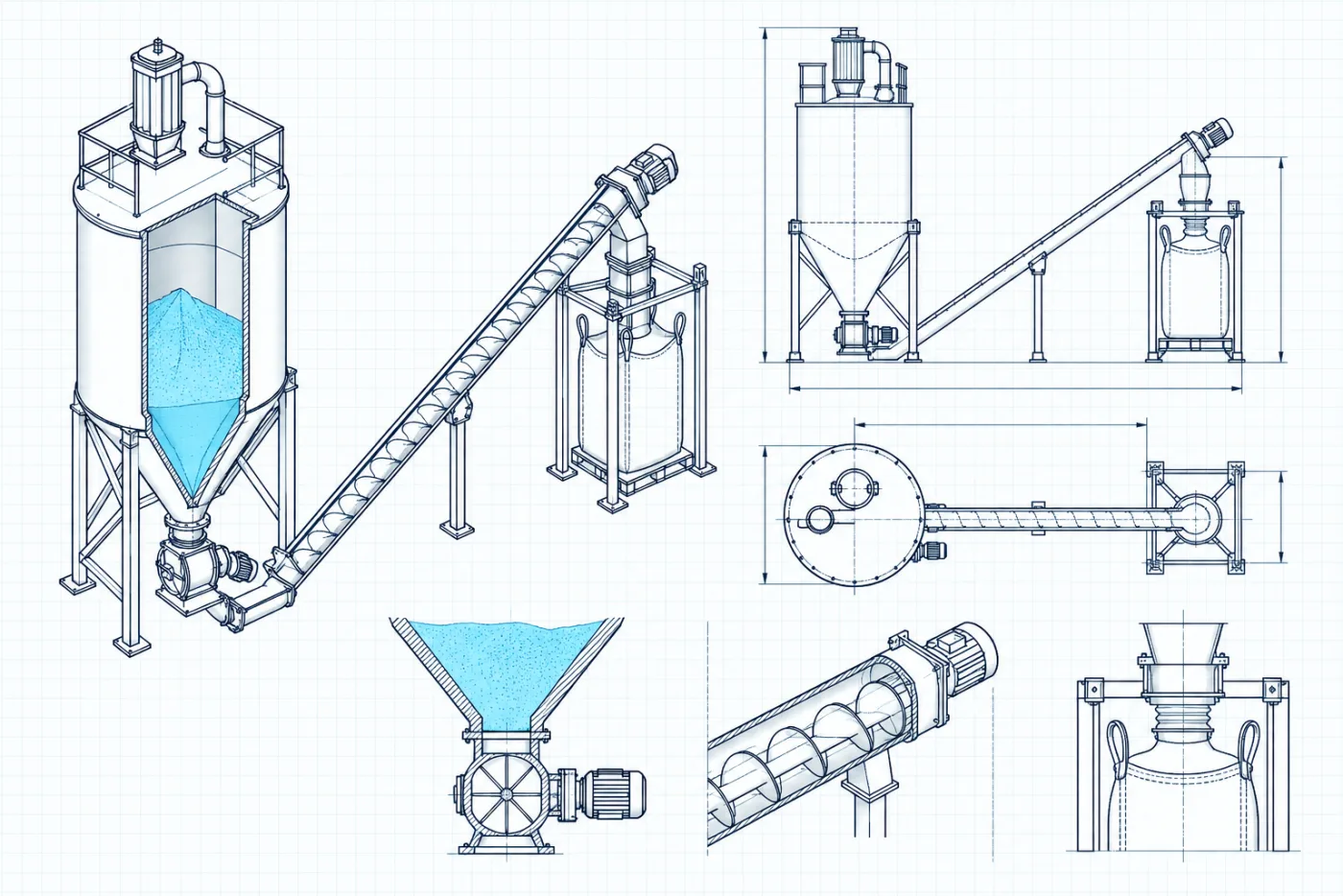
Bulk solids handling
My own specialty: conveyors, filters, silos, packing. Marketing for bulk material handling companies
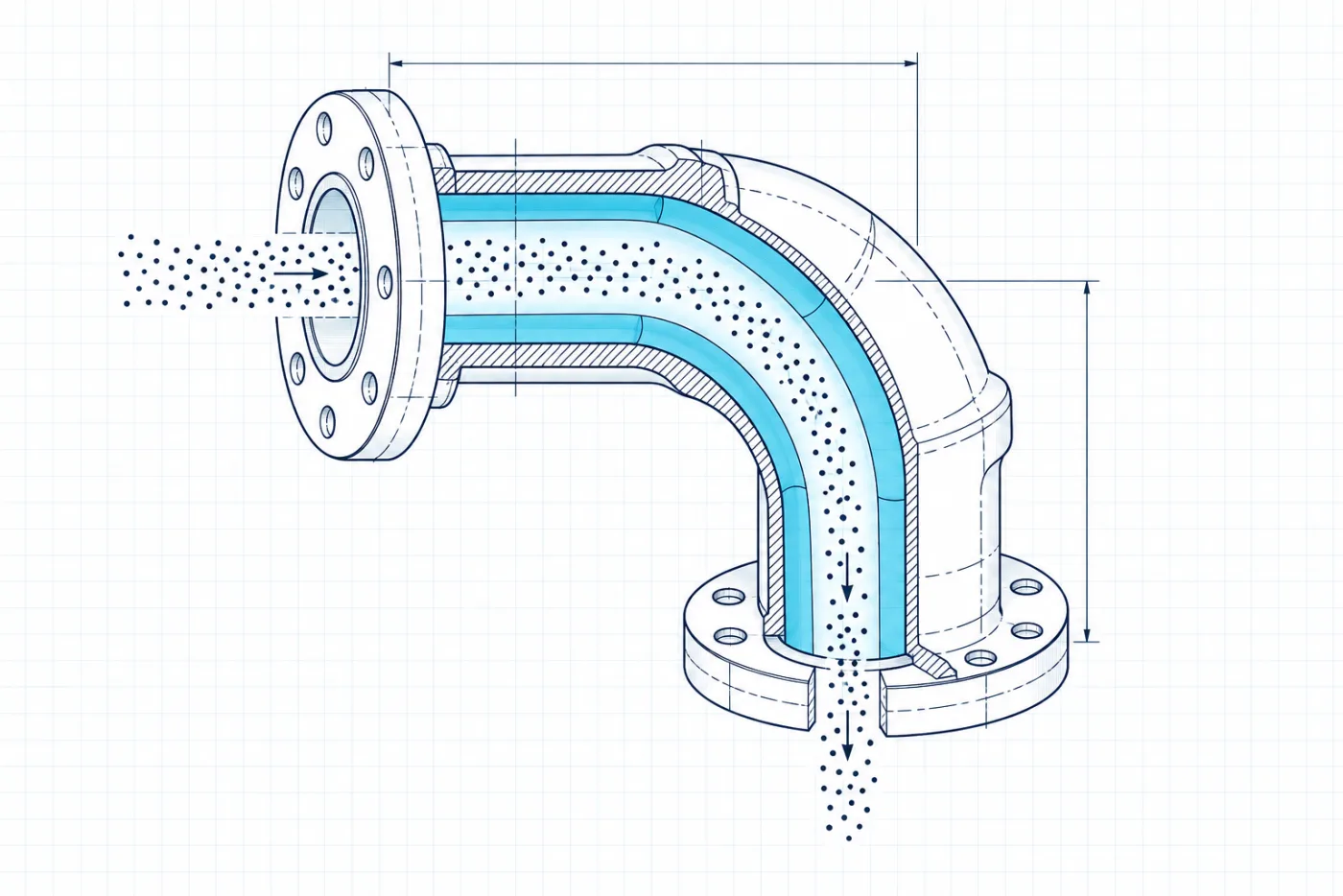
Technical ceramics
Wear protection, ceramic linings and custom ceramic components. Technical ceramics
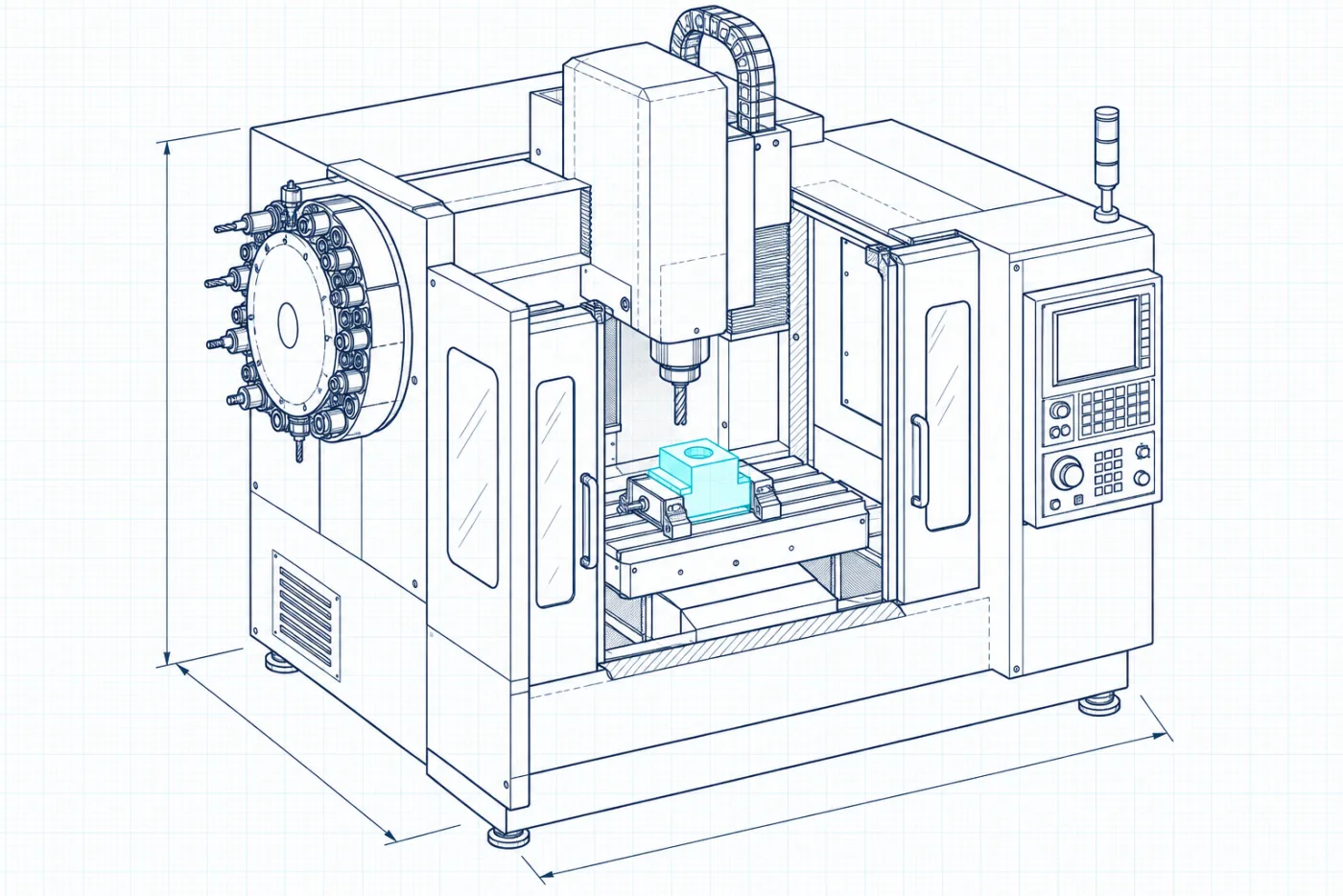
Machinery
Special machines, drives, measuring equipment, automation. Marketing for machinery manufacturers
How I build it for you
No strategy deck for the drawer. Five steps, and you have a say in each one.
- 1
Intro call
You describe product, customers and sales channel. Then I tell you whether I can help, and if not, I say that too. Result: you know whether it is worth continuing.
- 2
Buying group and triggers
I define which roles we address and which event makes your customers start searching: a breakdown, a retrofit, a new regulation. Result: a short list of roles and triggers.
- 3
Arguments per role
Data and limits for the design engineer, availability and lifetime cost for purchasing, risk for the owner. Result: one message per role, in their own terms.
- 4
Channels and inquiry path
Ads, pages and a form that clarifies need and timeframe upfront. Nothing starts without your approval. Result: campaigns ready for your sign-off.
- 5
Weekly report
You see cost per inquiry and per sales conversation, fee and ad budget kept separate. What doesn't pay off, I switch off. Result: a number you can check against your pipeline.
Which pieces
I take on
I do the work I recommend myself. Which pieces you need is settled on the first call. All services
-
Search ads on Google
For buyers and engineers who are looking for a solution right now. Google Ads
-
LinkedIn by job function
Ads for the roles in the buying group, also before a need exists. LinkedIn ads for industrial buyers
-
Pages for the evaluation
Websites with data sheets, operating limits and a short path to a quote. Industrial website design
-
The long stretch
Email and automation for prospects, existing customers and spare parts. Marketing automation
What it costs
A fixed price for the launch phase, then cancel monthly. Your ad budget goes straight to the platform, not to me.
- Three-month launch phase: €4,990 flat
- Payment: €1,990 at the start, then two payments of €1,500
- One offer on up to two platforms
- Ad copy, images, landing page and lead magnet
- Retargeting from day one
- Prequalification of inquiries, up to 300 conversations a month
- Ongoing optimization, monthly report
- Each additional platform €290 a month
- After that €1,190 a month, cancel monthly
- Ad budget extra, from €600 a month
A case from practice
A US manufacturer of technical ceramics, a search market of 320 searches a month, July to October 2026.
What would this look like in your market? Let's find out in a short call.
Frequently asked questions about industrial marketing
Is industrial marketing the same as B2B marketing?
It is a part of it. B2B marketing covers everything sold between companies, including software and services. Industrial marketing is about physical products and equipment, with buying groups, specifications and long cycles.
What does industrial marketing cost?
It depends on channels, the number of target roles and scope. Keep two items apart: the ad budget, which goes directly to Google or LinkedIn, and the fee for whoever runs the campaigns. With me the fee is fixed and agreed upfront, and after three months the work is cancellable monthly.
How long does industrial marketing take to work?
The first inquiries show whether message and target roles are right. Orders follow at the pace of your sales cycle: a plant builder with long project phases sees revenue later than a supplier of wear parts.
Does it work for a small manufacturer?
If the product has a clearly defined group of buyers, yes. A small market is often easier to reach, because the decision makers can be narrowed down precisely in search and on LinkedIn.
Do I need my own marketing department?
No. You need someone who answers inquiries and writes quotes, which is your sales team. I handle the rest, from the ad to the report.
Do you work with companies outside Germany?
Yes. I work in English and German, by video or phone, with a documented case from the US. For US manufacturers heading to Europe there is a separate page on market entry in Europe.

Let's talk about your market.
On the intro call you hear from me whether industrial marketing will carry your product and where I would start.